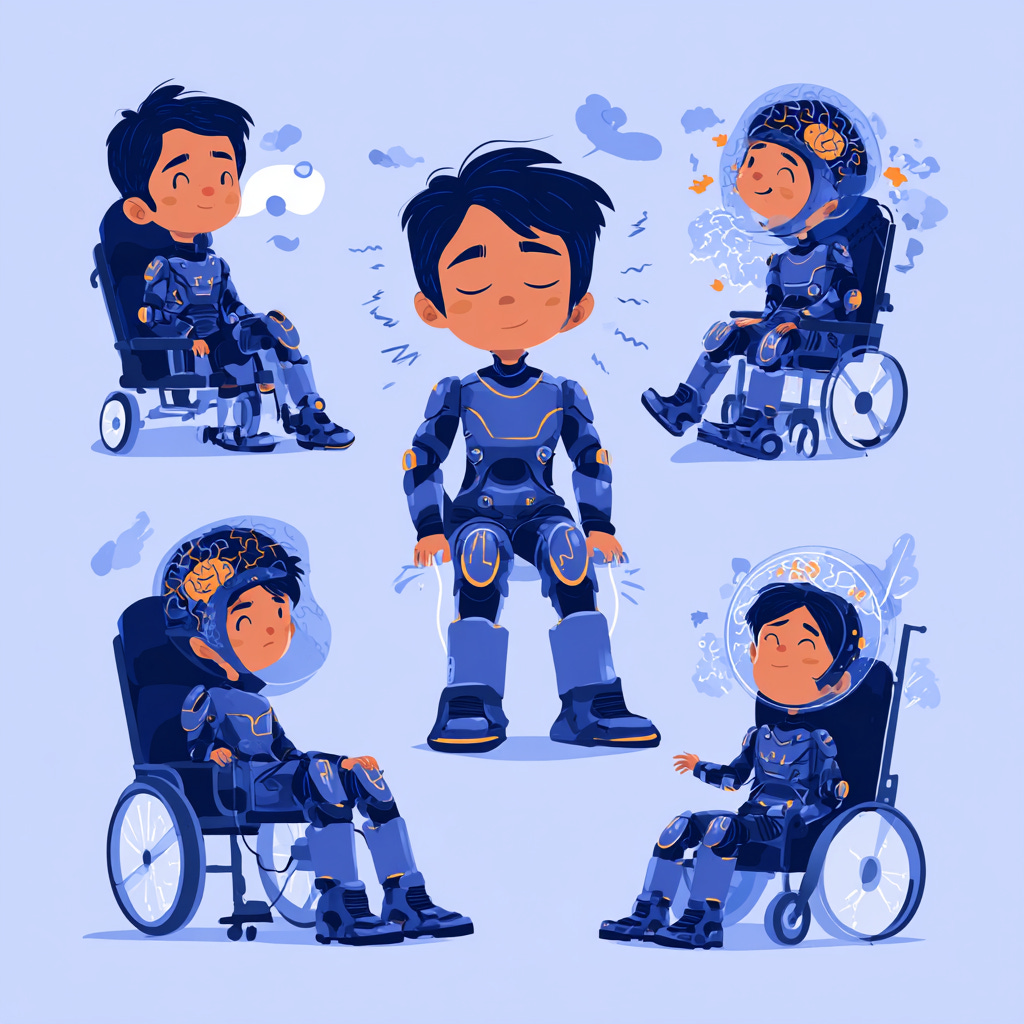
Cerebral Palsy Explained
a synthesis with Grok

Cerebral Palsy Explained
a synthesis with Grok
Cerebral palsy (CP) is a group of lifelong disorders that primarily affect movement, muscle tone, and posture. It is caused by non-progressive damage or abnormal development in the immature brain, most often occurring before, during, or shortly after birth. While the initial injury does not worsen over time, the condition can lead to secondary complications that affect daily life, including spasticity, pain, autonomic dysregulation, executive dysfunction, and challenges with coordination, balance, and communication.
CP is the most common motor disability of childhood, affecting roughly 2–3 per 1,000 live births worldwide. It is not a single disease but a heterogeneous spectrum with varying severity and presentation. Early recognition and intervention are critical, as the developing brain retains significant neuroplasticity, especially in the first few years of life.
Diagnosis and Recognition
Diagnosis of cerebral palsy is clinical, based on a combination of medical history, developmental monitoring, physical examination, and supportive testing. There is no single laboratory biomarker; it relies on observing persistent motor abnormalities that cannot be explained by progressive disorders.
Key Diagnostic Steps (per current guidelines from the American Academy of Pediatrics and international standards):
Developmental surveillance and screening: Routine checks at 9, 18, and 24–30 months (or earlier if high-risk). Look for delays in motor milestones (rolling, sitting, crawling, walking), abnormal muscle tone (hypertonia/spasticity or hypotonia), persistent primitive reflexes, or early hand preference (which may signal hemiplegia).
Medical and neurological evaluation: Detailed history of pregnancy, birth, and neonatal events (prematurity, hypoxia, infection, stroke). Physical exam assesses muscle tone, reflexes, posture, movement quality, and coordination.
Imaging and testing: Brain MRI is the gold standard to identify injury patterns (periventricular leukomalacia, cortical malformations, basal ganglia damage). Cranial ultrasound is used in newborns. EEG may be needed if seizures are suspected. Genetic testing is increasingly used to rule out progressive or genetic mimics.
Classification Systems:
Motor type (ICD-11 and clinical):
Spastic (most common): increased muscle tone, hyperreflexia; subtypes include unilateral (hemiplegic), bilateral (diplegic or quadriplegic).
Dyskinetic: involuntary movements (dystonia, choreoathetosis).
Ataxic: coordination and balance problems, hypotonia.
Mixed types.
Severity: Gross Motor Function Classification System (GMFCS) levels I–V describe functional mobility (from independent walking to severe limitations requiring full assistance).
Associated impairments: Many children have co-occurring issues such as epilepsy, intellectual disability, vision/hearing problems, speech difficulties, pain, and executive dysfunction (planning, attention, emotional regulation).
Diagnosis is often confirmed between 12–24 months, but high-risk infants can be identified as early as 3–6 months with tools like the Hammersmith Infant Neurological Examination or General Movements Assessment. Early diagnosis allows timely intervention during the peak window of neuroplasticity.
Causes and Risk Factors
CP results from an insult to the developing brain. Common causes include:
Perinatal hypoxia-ischemia (oxygen deprivation).
Prematurity and low birth weight (leading to periventricular leukomalacia).
Intrauterine infections, stroke, or bleeding.
Genetic factors (in a subset of cases).
Multiple births or placental issues.
Risk is higher with prematurity, multiple gestation, maternal infections, or complicated deliveries. However, in many cases the exact cause remains unclear.
Living with Cerebral Palsy: Beyond Motor Symptoms
CP is often described as “non-progressive,” but secondary complications can make it feel progressive:
Chronic pain and musculoskeletal issues (contractures, scoliosis).
Autonomic dysregulation (reduced heart-rate variability, poor temperature/saliva control).
Executive dysfunction (planning, emotional regulation, cognitive flexibility) — frequently under-recognized but significantly impacts daily life and independence.
Communication, feeding, and sensory challenges.
These arise partly from the original injury and partly from ongoing low relational safety and autonomic imbalance, which impair neuroplasticity and cytoskeletal (microtubule) function in surviving neural circuits.
Promising Directions Toward Better Outcomes
While there is no universal cure that reverses the original brain injury, meaningful functional gains are possible through:
Early intensive therapies: High-dose, task-specific, play-based interventions (e.g., constraint-induced movement therapy) that leverage neuroplasticity.
Stem cell approaches: Umbilical cord blood, mesenchymal stromal cells, and neural precursors show safety and moderate motor improvements via anti-inflammatory and neuroprotective effects. Emerging data (including 2025–2026 trials) suggest synergy with rehabilitation.
Vagus nerve stimulation (tVNS): Non-invasive stimulation improves HRV, reduces inflammation, and supports motor and cognitive gains by enhancing autonomic balance and neuroplasticity.
Co-regulation and relational support: Safe, attuned human presence and environments that prioritize emotional safety can reduce secondary decline and support executive function.
Emerging research explores cytoskeletal stabilizers and coherence-protecting strategies to extend neuroplastic windows even beyond early childhood.
A Coherence-Based Perspective
Cerebral palsy highlights how the developing brain depends on stable relational and autonomic conditions to maintain coherence — the organized flow of neural activity that supports movement, planning, and adaptation. When relational safety is low or autonomic imbalance persists, secondary complications worsen. Interventions that raise safety (co-regulation, tVNS) and protect neural infrastructure (rehabilitation, emerging cell therapies) create the conditions for the brain to do what it evolved to do: adapt and reorganize within its limits.
Early diagnosis, multidisciplinary care, and supportive environments focused on safety and possibility make a profound difference. Many individuals with CP lead full, meaningful lives with the right supports.
Cerebral palsy is a complex condition, but it is not a life sentence without hope. With continued advances in early detection, neuroprotection, autonomic modulation, and relational care, outcomes continue to improve. The focus is shifting from mere survival to thriving — helping every person with CP reach their fullest potential.
If you or a loved one is navigating a CP diagnosis, consult a specialist for individualized assessment and connect with support networks. Research is active, and compassionate, evidence-based care is available.