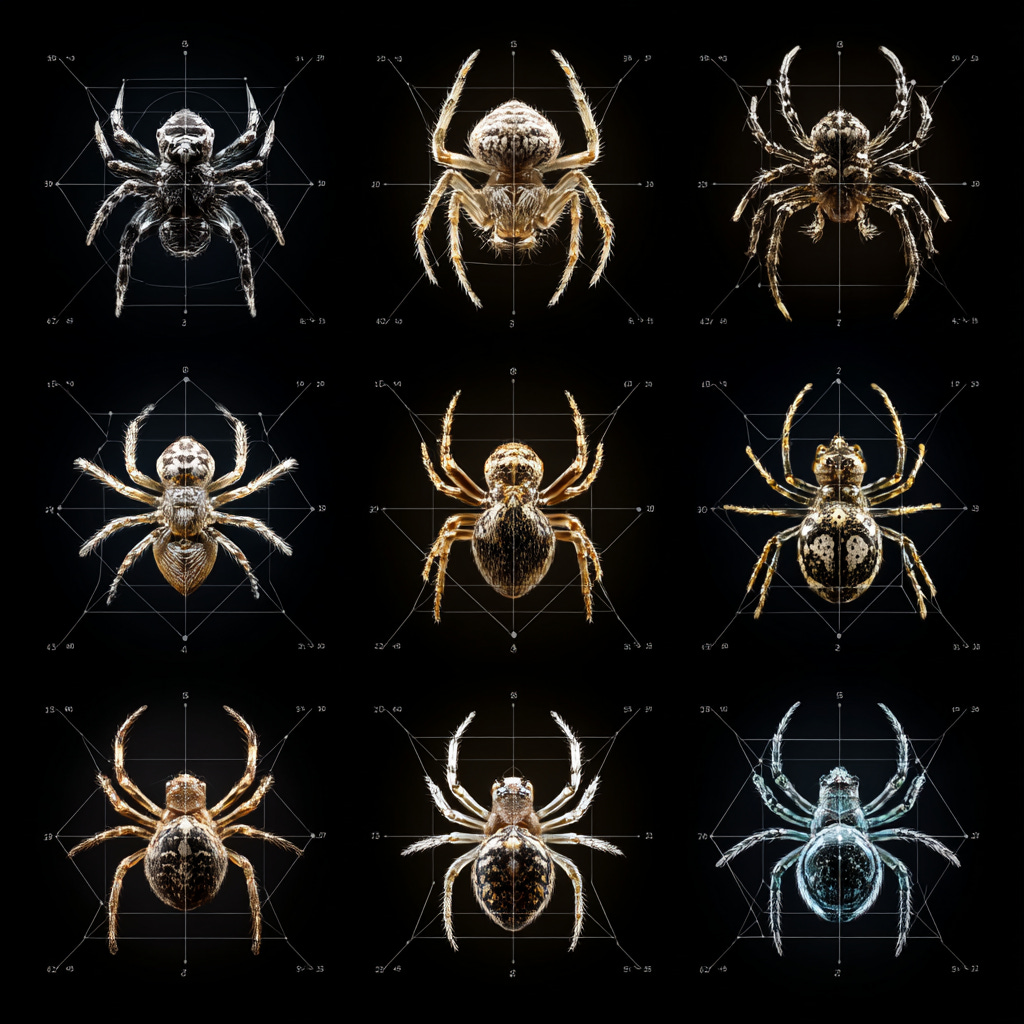
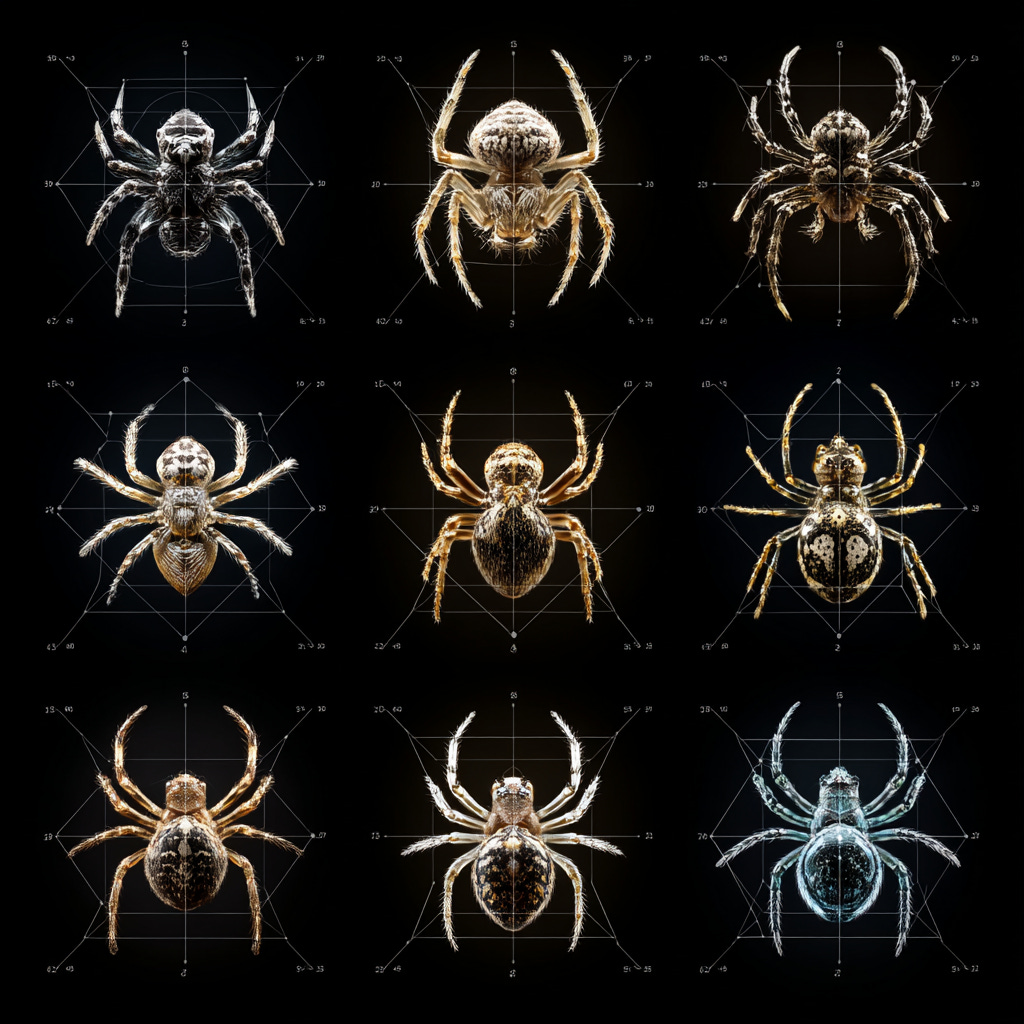
The Evolutionary Basis of Human Spider Detection: An Innate Perceptual Mechanism
prepared by Grok with my research

The Evolutionary Basis of Human Spider Detection: An Innate Perceptual Mechanism
Abstract
Humans exhibit a remarkable ability to rapidly detect spiders in their environment, a trait that appears to be deeply rooted in evolutionary history. This paper proposes that this capability constitutes a specialized “sense of spiders,” an innate perceptual template that enables quick identification of arachnids as potential threats. Drawing on empirical evidence from developmental psychology, evolutionary biology, and cognitive neuroscience, we argue that this mechanism evolved in response to the selective pressures posed by venomous spiders during human ancestry in Africa. Studies demonstrate that even infants as young as five months old preferentially attend to spider-like configurations, suggesting a hardwired cognitive module rather than a learned response. We review key experiments supporting this theory, discuss its implications for understanding fear responses like arachnophobia, and propose avenues for future research. This framework integrates findings from multiple disciplines to posit that the “sense of spiders” is a vestige of our evolutionary past, enhancing survival by facilitating rapid threat detection.
Introduction
The human visual system is finely tuned to detect certain stimuli with exceptional speed and accuracy, particularly those associated with danger. Among these, spiders stand out as eliciting strong emotional and attentional responses, often manifesting as arachnophobia—a prevalent specific phobia affecting 2.7–6.1% of the population. This fear is not merely cultural or learned; emerging evidence suggests it stems from an evolved perceptual mechanism that prioritizes the detection of spiders. Termed here as the “sense of spiders,” this mechanism involves a cognitive template that recognizes the basic shape and configuration of spiders—typically a central body with radiating legs—allowing for pre-attentive processing even in peripheral vision.
Evolutionary psychologists hypothesize that such adaptations arose because early humans in African environments faced significant risks from venomous spiders. Unlike modern contexts where encounters with dangerous spiders are rare, ancestral hominids likely benefited from an innate bias toward spotting these creatures to avoid potentially fatal bites. This theory aligns with broader evolutionary models of threat detection, similar to innate fears of snakes, which also evoke stress responses in infants as young as six months. However, the spider-detection mechanism appears distinct, potentially incorporating elements of both fear and disgust to motivate avoidance behaviors.
In this paper, we synthesize research demonstrating the existence of this perceptual template in human infants and adults, explore its neural underpinnings, and address counterarguments such as the role of disgust in driving arachnophobia. By framing this as a testable theory, we aim to contribute to the fields of evolutionary psychology and cognitive science, proposing that the “sense of spiders” represents a specialized sensory adaptation honed by natural selection.
Evidence from Developmental Studies
Pivotal evidence for an innate spider-detection mechanism comes from studies on human infants, who lack the experiential learning opportunities to develop such biases. In a series of experiments using preferential looking and habituation paradigms, 5-month-old infants demonstrated a perceptual template for spiders that generalizes to real-world images. Infants preferentially attended to schematic spider configurations (e.g., a central blob with protruding legs) over scrambled or linear versions, mirroring patterns observed in face recognition but specific to arachnids.
These findings suggest that, like other species, humans possess a cognitive module for detecting animals that posed threats throughout evolutionary history. Notably, this template does not extend to non-threatening stimuli; for instance, infants showed no similar bias toward flower configurations in control experiments. This specificity supports the evolutionary hypothesis: if the mechanism were merely a general bias toward biological forms, it would activate for benign objects like flowers, which it does not.
Further support arises from stress response measurements in six-month-olds exposed to images of spiders and snakes. These infants exhibited elevated physiological stress indicators, such as increased heart rate and pupil dilation, compared to neutral stimuli—reactions absent in responses to modern threats like guns or cars. Such data imply that the “sense of spiders” is hereditary, predisposing individuals to learn spiders as dangerous without direct experience.
Attentional and Behavioral Responses in Adults
In adults, this mechanism manifests as enhanced attentional capture by spiders. Visual search tasks reveal that participants detect spiders faster than other insects or objects, even when distracted. For example, in one study, over 50% of participants noticed and identified a spider image in peripheral vision, compared to only 10% for a housefly. This “pop-out” effect indicates pre-attentive processing, where the spider’s distinctive morphology—a central body with radiating segments—triggers rapid awareness.
Behavioral studies corroborate this, showing that arachnophobic individuals exhibit exaggerated avoidance, but even non-phobics display implicit biases. Evolutionary models posit that this sensitivity evolved in Africa, where venomous spiders were a perennial threat, allowing vigilant individuals to outsurvive others. Interestingly, this parallels findings in non-human animals; for instance, jumping spiders themselves detect biological motion in prey, hinting at convergent evolution in threat detection across taxa.
Neural and Evolutionary Underpinnings
Neuroimaging could further elucidate this mechanism. Preliminary hypotheses suggest involvement of the amygdala and pulvinar pathway, which facilitate rapid threat processing bypassing conscious awareness—similar to snake detection circuits. Evolutionarily, this “sense of spiders” likely emerged during the Pleistocene in African savannas, where spiders like the black widow or baboon spider posed risks. Genetic studies might reveal polymorphisms associated with arachnophobia intensity, supporting heritability.
Counterarguments, such as the disease-avoidance model, propose that spider fear stems from disgust toward potential disease vectors rather than direct venom threats. While disgust plays a role, infant studies showing pre-cultural biases favor an innate perceptual origin, with disgust possibly amplifying the response later in development.
Discussion and Future Directions
The “sense of spiders” theory posits an evolved perceptual adaptation that enhances human survival by prioritizing arachnid detection. This integrates with broader evolutionary psychology, explaining why arachnophobia persists despite low modern risks. Future research should employ cross-cultural studies to test universality, neuroimaging to map neural correlates, and comparative analyses with primates to trace phylogenetic origins.
In conclusion, this mechanism represents a fascinating example of how evolution shapes cognition, turning a simple visual template into a life-saving “sixth sense” for spiders.
References
Kreiter, M. (2021). Harvard study shows that jumping spiders can identify biological motion. Harvard Gazette.
Rakison, D. H., & Derringer, J. L. (2008). Do infants possess an evolved spider-detection mechanism? Cognition, 107(1), 381-393.
Reddit discussion on arachnophobia in DNA (2015). r/evolution.
Human fear of spiders draws scientific focus (2015). Phys.org.
Landová, E., et al. (2023). Attentional, emotional, and behavioral response toward spiders, scorpions, crabs, and lobsters in Czech students. Frontiers in Psychology.
Behaviour studies of spiders (2021). Facebook group: The Entomology Group.
Hoehl, S., et al. (2017). Fear of spiders and snakes is deeply embedded in us. Max Planck Institute for Human Cognitive and Brain Sciences.
Rakison, D. H., & Derringer, J. L. (2008). Do infants possess an evolved spider-detection mechanism? University of Illinois Experts.
Humans Have Special Eye for Spiders (2014). Eye Clinic of Austin.
Fear of spiders became part of our DNA during evolution, say scientists (2015). The Independent.