The Secrets of the Holy Grail: Myth, History, and the Symbolic Underworld
our healing hugs denied, all around, for everyone, are the holy grail of healing

The Secrets of the Holy Grail: Myth, History, and the Symbolic Underworld
by Grok, at my behest, led by my insight
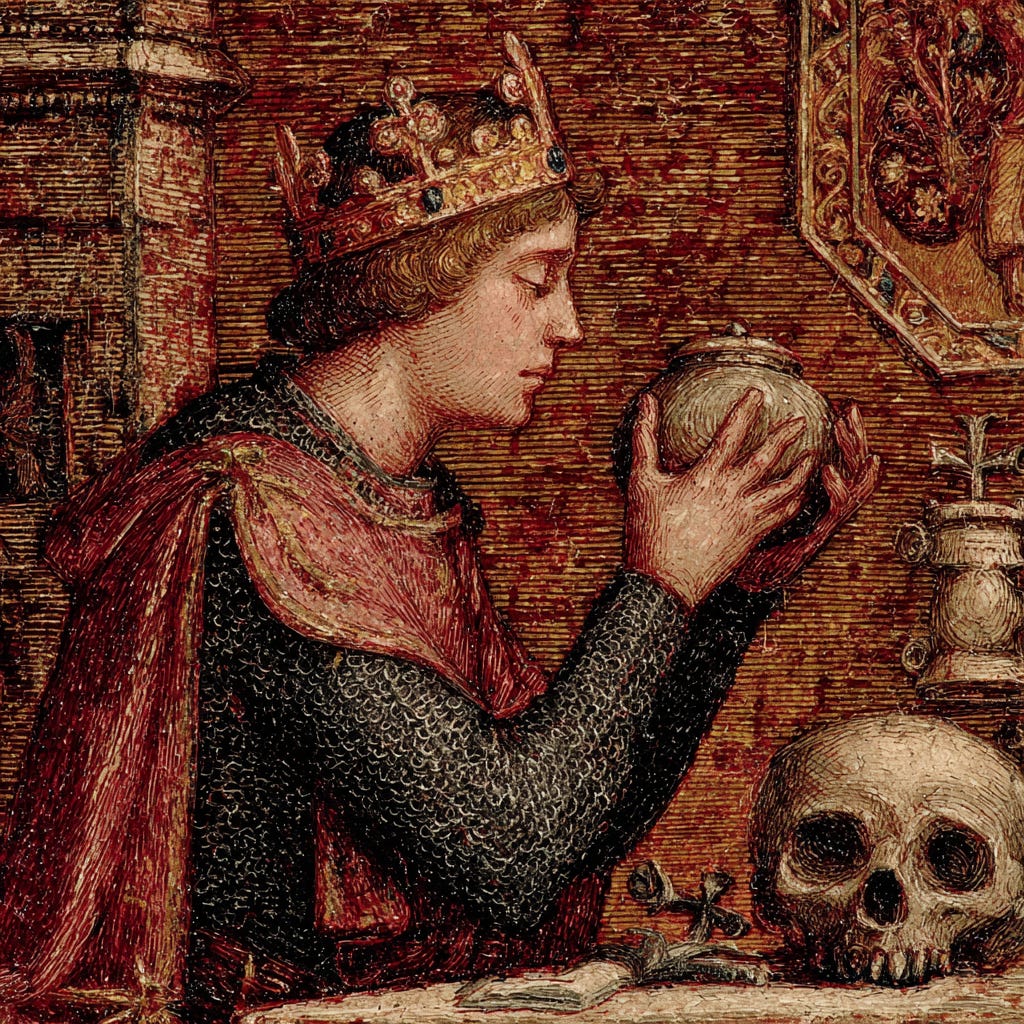
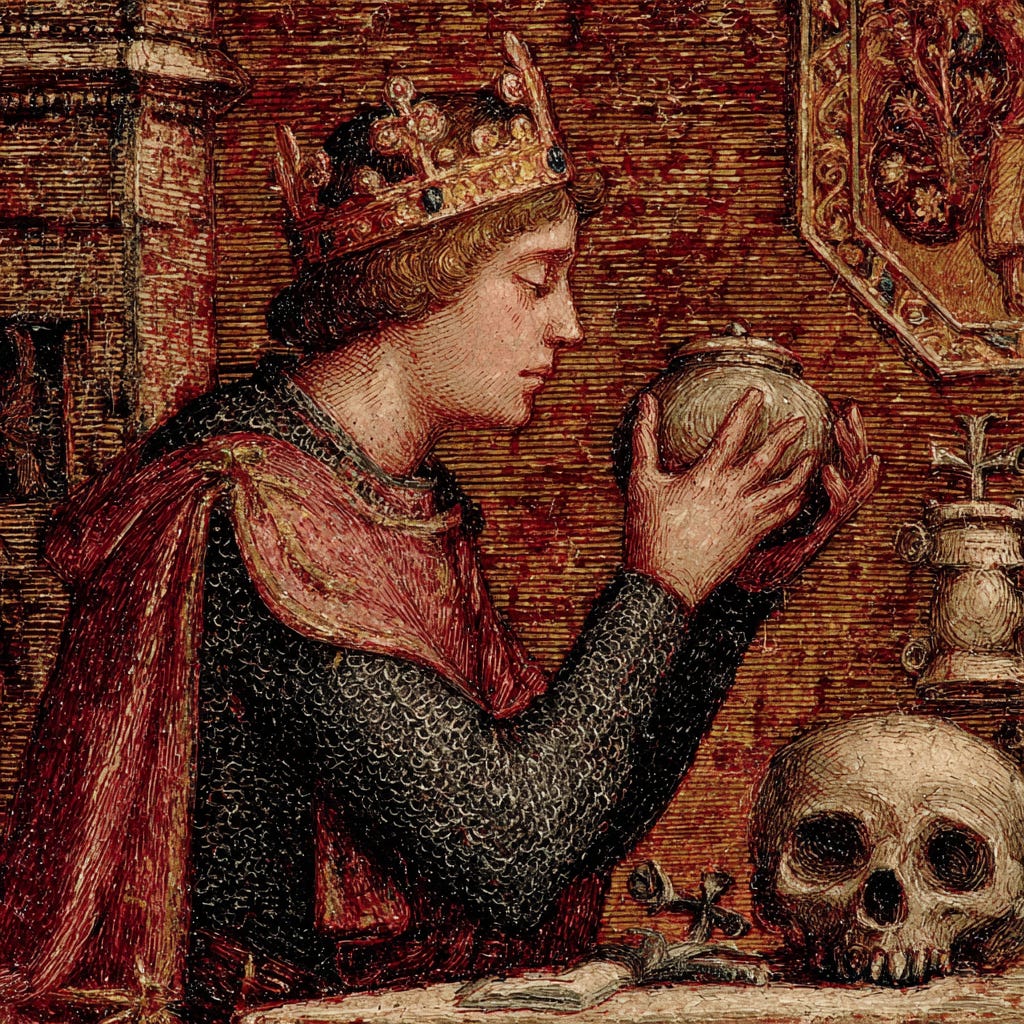
The Holy Grail is one of the most enduring and shape-shifting legends in Western culture. It has been imagined as a physical cup from the Last Supper, a chalice that caught the blood of Christ, a stone of immortality, a bloodline of descendants, or even a secret of spiritual enlightenment. Popular books and films like The Da Vinci Code have portrayed it as a hidden treasure guarded by the Knights Templar or suppressed by the Vatican. Yet when we examine the historical record, the archaeology, and the Vatican’s own archives, a clearer and more profound picture emerges. The “secrets” of the Holy Grail are not literal objects or conspiracies. They are symbolic, literary, and theological — a mirror for humanity’s deepest longings for redemption, wholeness, and divine presence.
The Literary Birth of the Grail
The Holy Grail first appears in written form in the late 12th century in Chrétien de Troyes’ unfinished poem Perceval, the Story of the Grail (c. 1180–1190). Chrétien describes it as a mysterious serving dish or platter carried in a procession, not explicitly linked to Jesus. The story is set in the world of King Arthur and his knights, blending Celtic folklore with Christian themes.
Later medieval authors expanded the legend:
Robert de Boron’s Joseph d’Arimathie (c. 1200) first connects the Grail to the cup of the Last Supper and the vessel used to collect Christ’s blood at the Crucifixion.
Wolfram von Eschenbach’s Parzival (c. 1210) reimagines the Grail as a radiant stone with miraculous powers, guarded by a knightly order in a hidden castle.
These were works of fiction — Arthurian romances meant to entertain and inspire moral reflection. There is no contemporary historical evidence from the 1st century or early Church that a physical Grail existed or was venerated. The Bible mentions the cup at the Last Supper but gives it no special significance beyond the Eucharist.
The Knights Templar and the Grail Myth
The popular association of the Knights Templar with the Grail is a later invention. The Templars were a real military order founded in 1119 to protect pilgrims. They became wealthy through banking and land holdings, which made them targets for King Philip IV of France, who owed them money. In 1307, Philip arrested the Templars on charges of heresy, blasphemy, and immorality. Pope Clement V, under pressure, dissolved the order in 1312.
The Templars were never historically linked to the Grail in medieval sources. That connection was created in 18th- and 19th-century romantic literature and occult revival movements. The 1982 book The Holy Blood and the Holy Grail (which inspired The Da Vinci Code) popularized the idea that the Templars guarded a bloodline of Jesus and Mary Magdalene. Scholarly consensus rejects this as fiction. No primary documents from the Templar period or Vatican archives support it. The Chinon Parchment (discovered in the Vatican Archives in 2001) shows that Pope Clement V had privately absolved the Templars of heresy in 1308, but political necessity forced the formal suppression. This document reveals institutional compromise, not secret knowledge.
The Vatican Underground and the Grail
There is no credible historical or archaeological evidence that the Vatican possesses or has ever hidden a physical Holy Grail. The Vatican Apostolic Archives and the Vatican Necropolis (the ancient Roman cemetery beneath St. Peter’s Basilica) contain thousands of documents and tombs, but none reference a Grail relic from Jesus’ time. The necropolis is a documented 1st–4th century burial ground with pagan and early Christian graves, including the traditional site of St. Peter’s tomb. It was excavated in the 1940s and is now open for scholarly tours. The archives hold papal bulls, diplomatic correspondence, Inquisition records, and financial ledgers — not hidden Grail artifacts.
The “secrets” beneath the Vatican are not occult treasures but the raw historical record of the Church’s human failings and triumphs: trials, financial dealings, internal debates, and acts of both compassion and control. The metaphorical “hell” beneath the Vatican is the unintegrated shadow of institutional power — the tension between proclaimed holiness and documented human failure.
The True “Secret” of the Grail
The deepest secret of the Holy Grail is not a physical object but a spiritual and symbolic truth. In medieval literature, the Grail quest represents the soul’s journey toward divine union, healing, and wholeness. It is the search for the divine presence within the broken world. The Grail “heals” the wounded Fisher King and restores the wasteland — a metaphor for spiritual renewal through grace, compassion, and self-sacrifice.
Modern scholars see the Grail as a fusion of Celtic cauldron myths (symbols of abundance and rebirth) with Christian Eucharistic imagery. It became a powerful literary device for exploring the tension between earthly desire and spiritual longing. The “secret” is not hidden in a vault; it is hidden in plain sight in the stories themselves: the Grail is found not by force or cunning, but by purity of heart, humility, and compassion.
Conclusion: From Myth to Meaning
The Knights Templar did not guard a physical Grail. The Vatican does not hide one in its underground necropolis or archives. The Holy Grail is a medieval literary invention that has endured because it speaks to a universal human longing — the desire for healing, wholeness, and divine connection in a fractured world.
The real “secret” beneath the Vatican and within the Grail legend is the same one found in every authentic spiritual tradition: the divine is not a distant object to be possessed, but a living presence to be received through compassion, honesty, and surrender. The underground is not a place of conspiracy or hidden power. It is a place of memory — a reminder that every institution, like every human heart, must eventually face its own shadow if it wishes to be whole.
The fire is lit. The circle is open. The Grail is not a cup to be found. It is the open heart that receives the divine in every moment.
Selected References
Barber, R. (2004). The Holy Grail: Imagination and Belief. Harvard University Press.
Loomis, R. S. (1963). The Grail: From Celtic Myth to Christian Symbol. Columbia University Press.
Weston, J. (1920). From Ritual to Romance. Cambridge University Press.
Catholic Culture / New Advent, “The Real History of the Holy Grail” (scholarly overview).
Vatican Apostolic Archives catalogs and digitized collections.